
Experience Debt Will Kill Your Brand Faster Than Technical Debt
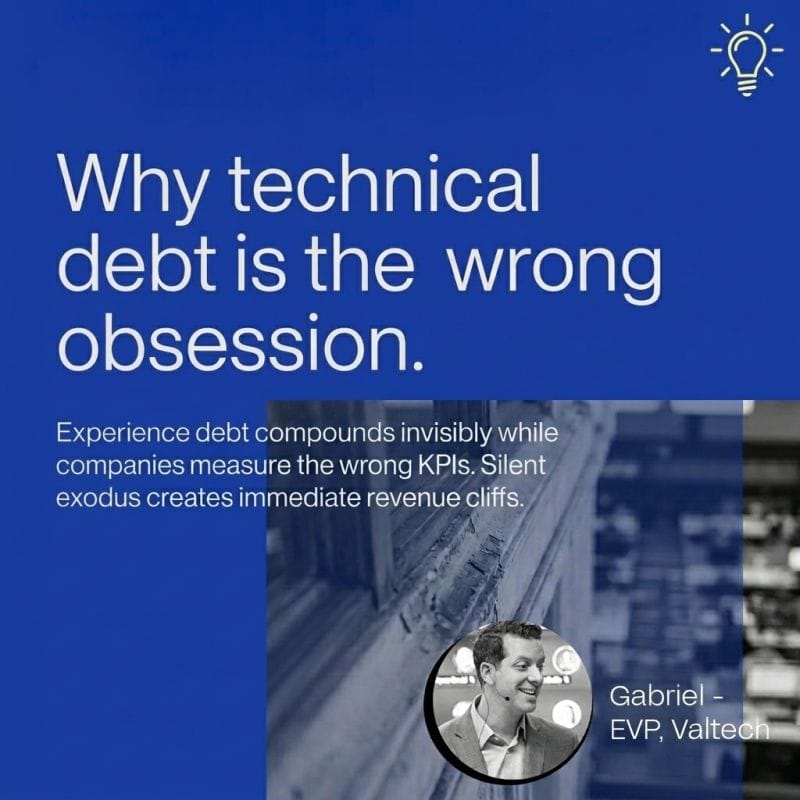
That experience debt compounds invisibly while organizations are measuring the wrong things.
Most transformation programs start by asking:
"What systems need upgrading?"
"What platforms should we modernize?"
"What technical debt is blocking us?"
Those are reasonable questions. But they miss the more dangerous pattern.
The customer is already leaving before your backend ever breaks.
I've watched this play out across industries. Leadership funds backend transformation because it feels urgent, measurable, and familiar. Meanwhile, customer experience gets the emotional attention but not the budget. So CX stalls, gets diluted, or reduced to surface wins, homepage refreshes, light personalization, features layered on broken foundations.
The organization celebrates interface improvements while the customer is still carrying the operational complexity.
Here's what makes experience debt more dangerous: it kills faster and costs more to fix later.
70% of customers abandon a brand after just two bad experiences. Not a slow fade. An immediate revenue cliff.
When technical systems fail, you get warnings. Gradual degradation. Time to respond.
When experience fails, you get silent exodus.
The real trap is this: organizations compensate instead of fixing. They pour money into paid media to replace lost organic conversion. Heavier promotions to push hesitant customers through. More service headcount to handle avoidable friction. More manual exceptions.
When retention, media, and service costs are all rising to protect the same outcome, you're not funding growth. You're financing unresolved experience debt.
I wish more executives understood this before starting transformation: your customer is not waiting for your backend to get fixed. They're making decisions right now based on the experience you're delivering today.
The question isn't whether to modernize systems. It's whether you can afford to keep ignoring the friction that's already costing you customers.